

How To Design Around A Corner Fireplace

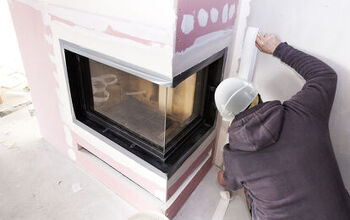
A fireplace often becomes the focal point of a room, in many cases sharing the job with a TV. But when the fireplace is in the corner, it presents a unique set of challenges for room design.
To design around a corner fireplace, start with your seating, and figure out the TV situation based on your actual habits. Address empty, dark corners, so the space doesn’t feel unfinished. Look for any shadows created by the angled fireplace and fill in gaps with appropriate lighting. Pay attention to how the surround and lighting work together.
A corner fireplace doesn’t have to be a roadblock that keeps you from reaching your perfect design. But you do need to reframe how you think about working around it. Consider your corner fireplace a design opportunity that opens doors to a more interesting, inviting space.
Why Corner Fireplaces Trip People Up
Before jumping into solutions, it helps to understand why a corner fireplace feel stricky in the first place. First off, it’s outside the norm. Walk into most living rooms and you'll notice the fireplace sitting smack in the middle of a wall, usually with all the furniture pointed toward it.
This straightforward placement provides a clear focal point and makes it fairly easy to lay out the rest of the room. People are so used to designing around a fireplace, they assume they need to do the same thing when it’s in the corner. But if you do that, the angled fireplace throws off the room’s balance and realistically, you don’t want all of your furniture aimed at a corner.
So, what do you do with the rest of the room? Your couch doesn’t have an obvious place to face. Angling it in front of the fireplace would feel as if you’re closing off that corner of the room. TV placement also gets complicated. It’s not necessarily easy to gather around a corner for movie night. A corner fireplace tends to throw the usual design logic out the window. As a result, it can be challenging to figure out how to design around it.
Tips For Designing Around A Corner Fireplace
Don’t let a corner fireplace stop your design plans cold. Here are some tips to make it work.
Start With The Conversation Area, Not The TV
A lot of people make the mistake of designing their whole living room around where the TV goes. With a corner fireplace, flip that thinking around. Start with where people will sit and talk, then figure out the TV situation. A corner fireplace tends to get people thinking about a triangle-shaped seating opportunity. Because the fireplace sits at an angle, you could place chairs in the diagonal space.
If you face them slightly toward the fireplace, it can create a cozy, huddled-together feel that many centered fireplaces can't quite match. Angling the chairs is also practical. People sitting in them still see the rest of the room. Swivel chairs are another option to create a cozy seating area without making people feel like they’re stuck in the corner.
The Big Sofa Question
If you want to incorporate a sofa into your fireplace seating, position it along an adjacent wall, or opposite an adjacent wall to broaden the entire seating area. Avoid angling it directly in front of the fireplace, unless you want a purposeful separation between the corner and the rest of the room. The exception to this would be if you want an intentional, separate conversation zone around the fireplace. Then you could angle the sofa in front, with two chairs on either end, to form an intimate seating area.
Elsewhere in the room, you may have another conversation area, a table for games, or a dedicated place to watch TV. However, if you prefer the room to feel like a single cohesive space rather than divided into zones, don’t angle the sofa. Make sure to position it so people can see the fireplace and TV.
Start with the couch, since it’s your largest piece, then layer in chairs, tables, and other items. A sectional offers another potential solution, with the shorter side taking the place of a chair on one side of the fireplace. A sectional almost gives the illusion of being slightly curved toward the corner.
Where Should The TV Go?
Most of the time, when you’re in a living room or family room with a fireplace, you still want a TV. It often ends up above or very close to the fireplace because it’s sharing the focus. If most of the seating in the room is positioned around the fireplace, it makes sense that the TV needs to be within range. There are a few approaches that actually work.
Mount the TV above the fireplace. This is the simplest option, and it works fine in plenty of rooms. The screen will be angled rather than facing straight into the room, but if the main seating is in the triangle, it often works in your favor. Check the viewing angles before you commit to mounting height and placement. This setup is likely the best bet for a small room where there isn’t much else going on. Everything is naturally aimed toward the corner because the room doesn’t have space for additional seating or other areas.
Hang the TV on an adjacent wall. If you don’t want the TV above the fireplace, mount it on an adjacent wall (preferably the longer one if you have a long, narrow room).
Position the sofa across from the TV at a comfortable distance; it doesn’t necessarily have to be against the opposite wall, depending on how large the room is. Here, the fireplace and the TV become two distinct focal points without competing for visual space. Arrange seating so people can comfortably see both.
Install a swivel mount. Where people sit in the room sometimes depends on how many people there are or what else is happening in the space. A swivel or articulating TV mount is a design saver. You can position the television to accommodate different viewing angles.
Skip the TV. Some of the best-designed rooms with a corner fireplace doesn't include a TV at all. Instead, the fireplace is a purely conversational, cozy feature, and the TV is in a separate room. If your space allows, this often creates the most relaxed, least cluttered result, but it’s not for everyone.
Awkward Leftover Corner Space
You figured out the seating, solved the TV puzzle. What do you do with the pockets of space on either side of a corner fireplace? Since it cuts across the corner at an angle, it sometimes leaves two triangular gaps, depending on its size. If the pockets are small, don't force furniture into them. Sometimes it's best to let the space breathe.
If the gaps are larger, don’t ignore them, which is usually a mistake. If you leave them empty, they can make the whole layout feel unfinished or strange.
Here are a few options to handle the space on either side of a corner fireplace:
- Built-in shelving. Custom or semi-custom shelves that wrap around the fireplace and extend to the corner walls turn wasted space into a storage and display area. It also helps visually anchor the fireplace, making the angle feel more like a deliberate design choice.
- A cozy chair and a small side table in one of the gaps if it’s deep enough. You’ll get a secondary, quieter seating spot in the same general area, without needing much square footage.
- Tall plants. A big leafy plant tucked into one of those corner gaps softens the hard angle of the fireplace. Plants also add some life to a room without requiring any construction.
Choose The Right Fireplace Surround
When it comes to a corner fireplace, the surround often matters more because the fireplace juts into the room at an angle. The surroundings will be one of the most visible design elements from almost every seat in the house. Pay attention to proportion, ensuring the surround fits within the room. In a smaller space, an oversized surround could make the rest of the room feel as if it’s shrinking.
A better option would be a simple surround that suits the room's scale. On the flip side, a larger room can handle a more dramatic fireplace surround without being overwhelming. When deciding on the design, think about how the it looks from multiple angles, not just straight on.
Take a walk around the room and imagine how tit will appear from each seating spot. Match the surround material to your overall style, but don't be afraid to let it be a slight departure from the rest of the room. A little contrast, like a modern black-framed fireplace in an otherwise traditional room, can be a good thing. This move could give the space some personality instead of feeling too matchy-matchy.
Lighting Makes A Difference
You probably don’t think too much about lighting when designing around a corner fireplace, but it's always a top priority. The angle of the fireplace will create different challenges than a centered one because of that 45-degree angle.
Depending on the time of day and your window placement, one side of the fireplace might sit in shadows while the other catches more light. You want to identify where those dark spots are and fill in the gaps.
- Place a floor or table lamp near the darker side of the fireplace to help even things out.
- Add a small picture or accent light above the mantel if the surround has texture or detail you want to show off.
- If you're doing built-in shelving in those corner pockets, shelf lighting can make a huge difference.
The right lighting turns what could be a dark, forgotten nook into a warm, layered part of the room.
Bringing It All Together (Around The Fire)
A corner fireplace asks a little more of you during the planning stage than a standard centered one. You can't just default to the usual design layout playbook. But that extra thought is exactly what makes these rooms feel so good once they're finished.
The diagonal angle that seems tricky at first actually gives you more flexibility for creating cozy, well-defined zones within a single room. Intentional seating, smart TV placement, and the right surround and lighting keep a corner fireplace from feeling like an awkward architectural quirk. You’ll have it feeling like the best part of the room.
Related Guides:
- 23 Types of Fireplace Mantels
- How Much Does It Cost to Reface A Fireplace?
- What Color Should I Paint My Brick Fireplace?

Stacy Randall is a wife, mother, and freelance writer from NOLA that has always had a love for DIY projects, home organization, and making spaces beautiful. Together with her husband, she has been spending the last several years lovingly renovating her grandparent's former home, making it their own and learning a lot about life along the way.
More by Stacy Randall