

Why Many Homeowners Regret The Open-Concept Layout

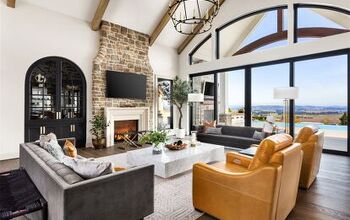
The open-concept layout has dominated home design for decades, praising the benefits of improved sightlines, more natural light, and harmonious entertaining. Indeed, having rooms that flow seamlessly into each other makes for great gathering spaces and feels open, large, and impressive. However, today, many homeowners are beginning to regret their open-concept floor plans.
Open-concept floor plans present several challenges, including a lack of privacy and storage. Noise, smells, and clutter are harder to control when you don’t have walls to separate different rooms. It’s also more difficult to design and arrange furniture for an open layout, and it can be less efficient when it comes to heating and cooling them.
It’s not that open-concept layouts are bad or even that nobody wants them. Many people still seek out open floor plans and prefer the more expansive look they offer. However, if you’re curious about why many others are giving them a thumbs down, keep reading to discover the most common complaints of the open concept plan.
Eight common complaints of the open-concept plan
1. Open-Concept Layouts Mean A Lot More Noise
One of the biggest regrets homeowners have about open-concept homes is the noise factor. For many, it feels like there’s constant noise, and you simply can’t get away from it. Without any walls to block or muffle sound, everything echoes, and you hear it all.
The TV in the family room competes with the clank and chink of dishes in the kitchen. You’re struggling to focus on your friend in the dining room because you’re distracted by the conversation going on in the living room.
Quiet moments are few and far between in an open-concept layout. The more people you have living in the home, the noisier it gets. Unfortunately, many families don’t realize this drawback until they’re already living with it.
2. Smells Travel Everywhere
It isn’t just noise that flows throughout an open-concept home; it’s also smells. When you’re baking cookies in the kitchen, that might not seem like a big deal. However, you don’t necessarily want to smell a bunch of onions and garlic 24/7.
The odors are constant, traveling carefree throughout the space with nothing to block them. You could end up with a couch that smells like curry or an easy-chair that reminds you of Grandma’s meatloaf.
Sure, there are things you can do to get rid of the smells, like exhaust fans (more noise), candles, and other items, but it’s tricky to keep up with how smells permeate everything in an open layout. Also, for this reason alone, among others, open-concept layouts may not be as ideal for entertaining as people believe them to be.
3. You Can’t Escape Visual Clutter
When you’re dealing with one big open space, it’s a lot harder to hide clutter. Of course, decluttering and minimizing what you have is a great first step, but you can’t eliminate everything.
You feel like you need to clean constantly. Instead of leaving dishes in the sink until later, you have to clean the kitchen because everyone can see it. The toys in the living room can’t wait until bedtime because you’re hosting a dinner at five, and the dining room is in the same space.
The mail you drop on the kitchen island is visible from everywhere. You can’t shut a door and handle something later. It’s not necessarily a dealbreaker for open layouts, but it is certainly a big factor to consider. Unfortunately, many homeowners don’t think about it beforehand and regret it later when they feel like they need to tidy nonstop.
4. You Don’t Realize How Much You Crave Privacy Until You Live In An Open-Concept
Privacy becomes almost impossible to achieve when you have an open-concept, unless you want to spend all your time in the bedroom or bathroom. Simple tasks like making a phone call, watching your favorite TV show, or doing homework can become frustrating. When you have to compete with a bunch of other noises and people in the space, it ramps up the stress levels.
When guests come over, you feel like they can see all of your personal life out on display. If you work from home, your office may very well be right in the middle of your entertaining space. You feel like you have no place to be alone, zen out, or rest and recharge.
It becomes especially tough if you pursue hobbies or like to work out at home. You have to do these things in the same space where you eat and entertain. It adds an extra layer to your routine, because now you need to think about how you can hide it, schedule alone time to do it, etc.
5. Open-Concept Layouts Are Less Efficient
Open spaces look great, but they’re difficult to heat and cool, at least the ones with lots of square footage. When you have one big room that combines multiple zones, the HVAC system has to handle it all at once. Also, many open layouts come with higher ceilings, which is another increasing factor in your energy bill.
All of that natural light you’re letting into the entire space also means more sunlight driving up utility costs. It can be hard to control the temperature in the room, not to mention find a temperature that pleases everybody.
6. Furniture Placement Can Be A Challenge
A traditional floor plan with separate rooms comes with natural boundaries that help guide furniture placement. You also have more defined functions for each room, which assist with determining the best type of furniture and flow for the space.
However, with an open-concept floor plan, space planning becomes much more challenging. You have to not only decide where to put furniture, but also where to put your rooms, imagining invisible walls.
Homeowners with open layouts need to decide which area will be the dining room, the living room, etc. Is the furniture the right scale for the space, since it’s meant to be within a particular zone? Should you use rugs to define the area or more furniture?
Obviously, many people succeed in designing well-functioning open-concept spaces, so it’s not impossible. It just takes a lot more thought and ingenuity to arrive at a design that works. You need to find a setup that looks balanced, proportionate, and clearly defines each zone.
7. Limited Storage Space
When you remove walls, you often remove a lot of storage potential. There are fewer places to put cabinets, shelves, closets, etc. This lack of storage contributes to the increased visual clutter problem mentioned earlier.
The need for dual-purpose furniture, clever storage, and decluttering becomes even more pronounced. You also might find that you’re shoving more stuff into bedrooms to get them out of the main living areas, leading to cluttered, restless nights.
8. Open-Concept Homes Might Be Harder To Sell
This one is a bit hit or miss, because although the overall trend might be shifting away from open-concept, there are still many people out there who want it. New construction homes are still showcasing large, open floor plans. Yet, buyers are split, and many now want homes with more defined, separate spaces, leading them to older houses.
Therefore, it might be harder to sell your home if it has a big, open layout. It’s something to consider, and also depends on the market you live in and what most buyers prefer in that area.
Open-concept homes aren’t obsolete by a long shot, but it’s worth noting that preferences are evolving. So, where this point may be most pertinent is if you’re a homeowner considering knocking down walls in your home.
Before you pull out the sledgehammers, take stock of what most buyers seem to want in your area. Of course, also consider if you even plan to sell or if you’re living in your forever home.
If you want an open layout and don’t plan to move, go for it. But if you know you’re going to list your home within the next five or even ten years, you might want to keep living with your walls.
Does A Home Need More Than One Great Room?
The biggest regret homeowners have about open-concept floor plans is the lack of purposeful space. A giant great room looks fabulous and encourages families to spend time together, but not everybody wants to be together 24/7.
Life isn’t one big party, at least not for the average person, and a home needs to support the life you want to live. Therefore, if you crave privacy, a place to relax, and want to pursue certain hobbies, you may gravitate toward a home with more walls.
In some cases, homeowners are finding ways to have the best of both worlds. Pocket doors, glass partitions, or flex spaces allow them to have open spaces when they need them and privacy when they don’t. It’s all about finding a balance. An open concept isn’t bad. It just isn’t for everyone.
Related Guides:
- Designing A Kid-Friendly Home Without Sacrificing Style
- 10 Ways To Give Your Home A Refresh Without Spending Any Money
- Want A Bigger Home? First, Look At The Benefits Of Less Square Footage

Stacy Randall is a wife, mother, and freelance writer from NOLA that has always had a love for DIY projects, home organization, and making spaces beautiful. Together with her husband, she has been spending the last several years lovingly renovating her grandparent's former home, making it their own and learning a lot about life along the way.
More by Stacy Randall