

Why Does My Pool Water Smell Like Fish?

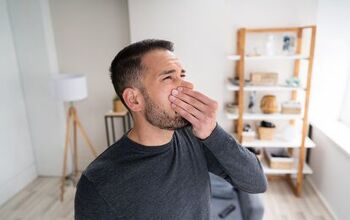
Most people expect their swimming pools to smell like chlorine, and any deviation can be alarming. That’s especially true if you smell a fishy odor, which can easily make you think twice before swimming. So, why does my pool water smell like fish?
Your pool water can smell like fish if the pump and filter don’t work correctly, as you’ll find pockets of untreated water. The fishy odor can also appear if there’s lots of organic matter, like dead leaves and plant trimmings, rotting in the filter. Poor maintenance, excessive chloramines, and algae blooms can also produce a fishy odor.
The fishy odor doesn’t necessarily mean that your pool has turned into a dangerous death trap however, it does mean that you should test and treat the water before swimming. Follow along as we explore why your pool water smells like fish and highlight some easy solutions.
What Is The Fishy Smell Coming From My Pool?
A fishy smell coming from your pool may be caused by a number of factors, such as:
Impure Water Source
The type of water you put in your pool is extremely important and will affect your maintenance routine. You’re supposed to put potable water in your swimming pool, which means tap water for most people. People who don’t have that option and put well water in their pool. While this can work in a swimming pool, it may not always smell great at first.
That’s especially true if you don’t treat the water correctly and right away. In that case, you may notice it smells like fish. You’ll have even more trouble if you fill your swimming pool with pond or lake water. It’s too hard to control that water source, and the bacteria alone can produce fishy odors. Even rainwater runoff can smell bad because it may contain bacteria and other impurities.
Algae Blooms
Many people associate algae blooms with green pool water and lots of maintenance. Algae blooms can form in your pool for many reasons, but poor maintenance is the main one. For example, you may find algae in your pool if you don’t use enough chlorine or maintain a proper pH balance. Before the green appearance sets in, you will notice an unusual musty and earthy smell in and around the pool, but it may sometimes smell like chlorine.
That’s why many people don’t catch algae blooms right away, which is a problem in itself. However, it can also smell somewhat fishy and pond-like. Once this smell becomes prominent, the chlorine levels will drop, and the water will quickly become cloudy. Don’t swim in your pool if you notice a fishy smell and cloudy or discolored water.
Excessive Chloramines
Every pool owner understands what chlorine is, but not everyone knows about chloramines, which are the byproduct of chlorine interacting with nitrogen-rich contaminants, like sweat, urine, and cosmetic products. Once these contaminants bind with chlorine, it will become much less effective. The chloramines that come from this can irritate your eyes and skin, but they also smell quite bad.
The smell differs depending on the concentration of contaminants and chlorine, but it's often fish-like. In some cases, chloramines smell like bleach and other commercial cleaning products. Increase the pool’s free chlorine level by shocking the water with a high dose of chlorine. From there, shock the pool once a weekl to maintain healthy chlorine levels.
Organic Debris
The phrase “what you put in is what you get out” is quite true with swimming pools. That’s especially the case with organic materials, which can easily fall into a swimming pool. Decaying organic materials will alter your pool’s smell and chemistry. That’s especially true if you don’t empty your skimmer basket once a day. Leaves and other plant debris can produce a fishy odor when soaked with chlorinated water.
The smell will likely worsen as the organic matter decomposes in the water. As the materials decay, they can overload the pool’s chemistry and produce more chloramines. It’s hard to keep up with this if your swimming pool is surrounded by trees and other plants.
Inadequate Circulation
A swimming pool relies on a pump to circulate the water, which is important for all aspects of pool health. Without a proper pump, the filter can’t clean the water adequately, and chlorine may not spread evenly. The last thing you want is for one part of your pool to be chlorinated while other areas are unprotected. Once that happens, you’ll find pockets of unhealthy bacteria. In that case, you may smell chlorine in one corner and notice a fishy odor in the other.
Replace your pool pump if it no longer works, especially if it’s between 8 and 12 years old. Doing so will ensure proper chemical distribution and sanitation, which can prevent algae blooms and bacterial infestations. If your pool pump isn’t too old, you can likely repair it for $100 to $400, depending on the problem. However, some repairs exceed $1,000, and you’re better off replacing the pump.
Should You Wait To Swim If Your Pool Smells Bad?
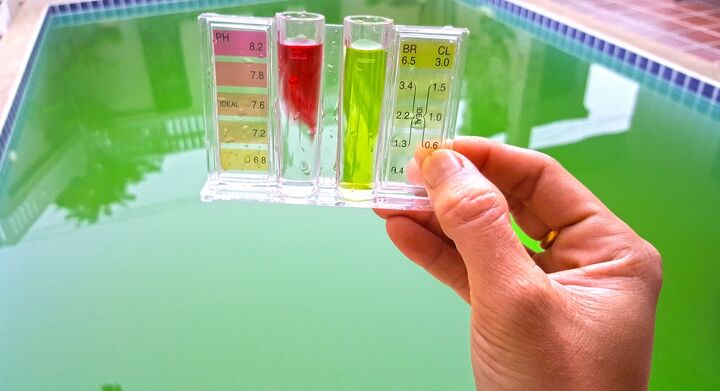
You should wait to swim until you’ve tested and treated your pool if it smells bad. Ideally, keep pH test strips and chlorine test strips near the pool. That way, you can easily test your pool as needed if you notice something seems wrong. It’s also important to keep pool shock on hand. Many common pool problems require you to shock the pool to sanitize the water.
Summing It Up
If your pool water smells like fish, it’s likely because of excessive chloramines or algae blooms. Skin oils, makeup, lotions, urine, and sweat can trigger chloramines, which can produce a fishy odor. Otherwise, the smell could be due to rotting leaves and grass trimmings or poor circulation due to a weak pool pump.
Related Guides:
Nick Durante is a professional writer with a primary focus on home improvement. When he is not writing about home improvement or taking on projects around the house, he likes to read and create art. He is always looking towards the newest trends in home improvement.
More by Nick Durante