

Can You Use Table Salt To Melt Ice?


It’s hard to ever feel fully prepared for a winter snowstorm. You can’t always find road salt in stores, and you may not even know a snowstorm is coming. It would good to know if you can use table salt to melt ice.
You can melt ice with table salt, as it’s quite similar to road salt, although not as potent. Road salt contains other additives and a higher concentration of sodium ferrocyanide and ferric ferrocyanide compared than table salt. As well, table salt is ineffective when temperatures drop below 15 degrees Fahrenheit.
Ideally, you should stock up on road salt long before snow and ice are in the forecast. Follow along as we explore what you need to know before using table salt to melt ice.
Does Table Salt Melt Ice?
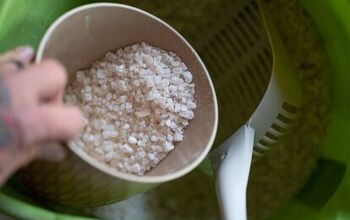
You can use table salt to melt ice, but it isn’t as effective as commercial salts formulated to melt ice. Table salt and driveway salt contain sodium chloride (NaCl), but they differ in consistency and additives. For example, table salt is much finer and sandier than driveway salt, which is chunky and coarse.
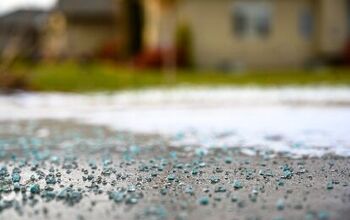
Road salt also contains high levels of sodium ferrocyanide and ferric ferrocyanide to ensure it doesn’t cake. Sodium ferrocyanide appears in table salt, but in a much lower concentration than what’s found in road salt. Naturally, road salt is much stronger than table salt, as it’s not meant for human consumption. However, it’s worth using some table salt to melt ice in a pinch. IYou’re better off stocking up on commercial-grade road salt before it snows, since table salt isn’t as effective when the temperature drops below 15 degrees Fahrenheit.
How Does Table Salt Melt Ice?
Table salt melts ice because it lowers water’s freezing point, then gets between water molecules as it dissolves into ions. Once this happens, water can’t freeze and turn into ice crystals like it otherwise would, although table salt isn’t quite as effective compared with commercial-grade road salt found in home improvement stores. In theory, table salt should always prevent water from turning into ice when temperatures fall below 32 degrees Fahrenheit, but that’s not always the case, as the water can still turn into ice when it's colder than 15 degrees Fahrenheit. However, you can have better results when using a lot of table salt at once and concentrating on a specific area.
Can You Use Table Salt On A Driveway?
While you can use table salt on a driveway, it’s not as effective as using road salt. In some ways, table salt is just as effective as road salt when it comes to melting ice, but it doesn’t apply if the outside temperature drops below 15 degrees Fahrenheit. That’s not a problem with commercial road salt, which works well in sub-freezing temperatures. The big downside to using table salt on a driveway is that you can’t likely cover the whole driveway. Most people buy table salt in smaller amounts than road salt.
Because of that, you may not have enough table salt to prevent your driveway from freezing. While they can be interchangeable, it’s better to use road salt to melt ice due to its coarse texture and better performance. However, don’t hesitate to dump some table salt on the driveway if it’s all you have when your driveway gets slick.
What Can You Use If You Run Out Of Salt When It Snows
You aren’t necessarily out of luck if you run out of salt when it snows. As long as you have some key household items, you can treat your icy driveway in a few easy ways, including:
Cat Litter
The thought of cat litter on your driveway may seem unusual, even if it’s clean and unused. However, it may be your best option if you run out of salt ahead of icy weather. Cat litter doesn’t necessarily melt ice like salt, but it can provide enough traction to safely traverse a slick driveway. That’s because it’s coarse and gritty, and it can help you if your car gets stuck on the ice. Of course, you should clean your driveway and remove the litter after the ice melts. Until then, you can at least celebrate getting unstuck despite running out of salt.
Coffee Grounds
Coffee grounds are among the best salt alternatives to use during the winter. Not only are coffee grounds coarse, but they also absorb sunlight quite well, which helps melt ice. More importantly, coffee grounds contain nitrogen, which can lower the freezing point and help prevent ice from forming. Coffee grounds are also biodegradable, so you don’t have to worry about harming the environment. They’re also unlikely to irritate your dog’s paws like road salt can.
White Vinegar
Known for its acidity, distilled white vinegar is useful in and outside of your house. During the summer, white vinegar can kill weeds, and during the winter, it can melt ice. To melt ice, spray your driveway with an even mixture of white vinegar and warm water. Otherwise, you can use white vinegar to prevent ice from forming on your driveway. This is even better when mixed with table salt or road salt, but it’s also a good alternative. Like salt and coffee grounds, the acetic acid in white vinegar can lower the freezing point and prevent ice from forming.
Ashes
Have you been using your fireplace this winter? If so, you probably have accumulated a good amount of ashes, which you can use instead of salt to melt ice. That’s because wood ash contains potassium, which can melt ice on your driveway and walkways. It works relatively quickly because wood ash also absorbs enough sunlight to generate heat, which will expedite the process and ensure the ice on your driveway melts.
Fertilizer
You may have noticed by now that some nutrients are especially effective at melting ice. That’s why you may want to consider using fertilizer on your driveway if you run out of table salt. However, you must carefully read the label to ensure the fertilizer contains high concentrations of nitrogen. Most fertilizers are also gritty enough to provide traction if you must drive on an icy driveway. Keep in mind that you should only use fertilizer to melt ice in emergencies. That’s because in extreme cases, the runoff can damage nearby plants.
Summing It Up
You can use table salt to melt ice, but it’s not as effective as road salt. Road salt is more highly concentrated than table salt, and it’s also much grittier, which provides traction. Table salt won’t melt ice when the outside temperature drops below 15 degrees Fahrenheit, but road salt will.
Related Guides:
Nick Durante is a professional writer with a primary focus on home improvement. When he is not writing about home improvement or taking on projects around the house, he likes to read and create art. He is always looking towards the newest trends in home improvement.
More by Nick Durante