What Should You Set Your Thermostat To In The Winter?


The urge to adjust the temperature on your thermostat throughout the winter can be overpowering. As tempting as it may be, choosing the wrong temperature for too long can be expensive and damaging. So, what should you set your thermostat to in the winter?
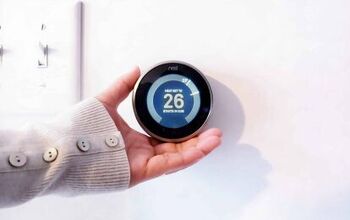
Set your thermostat to run at 68 to 70 degrees throughout the winter to save money and keep your house comfortable. You can adjust the temperature as needed, but you should at least reduce it for 8 hours per day. Doing so can prevent exorbitant energy bills and protect your furnace from unnecessary strain.
Never set your thermostat below 55 degrees during the winter, or else the pipes may freeze if it’s below freezing outside. Follow along as we explore everything you must know about using your thermostat during the winter.
What Is The Best Thermostat Setting For The Winter?
Ideally, you should set your thermostat to 68 degrees Fahrenheit during the winter. Of course, you can set it higher when your house is cold, but you shouldn’t run it high for too long. Doing so can strain your furnace, make your home uncomfortable, and increase your bills. Even the U.S. Department of Energy recommends setting your thermostat to 68 to 70 degrees Fahrenheit during the winter. At night, it’s better to reduce the temperature by a few degrees to prevent overheating. Not only will this ensure you don’t get too hot while sleeping, but it will also help you save money on bills. By lowering the temperature for at least 8 hours per day, you can save up to 10% on heating costs throughout the winter. That may not seem like much, but it’s worth it considering the rising cost of gas and electricity.
What Temperature Should I Set My Thermostat To Prevent Pipes From Freezing?
To prevent pipes from freezing, set your thermostat to 55 degrees Fahrenheit or higher. Of course, that’s pretty low, and most people set their thermostats to 60 to 68 degrees Fahrenheit. If your furnace breaks when the outdoor temperature is below 32 degrees Fahrenheit, you must schedule an emergency repair. Otherwise, there’s a good chance the pipes will freeze. When pipes freeze, ice expands and increases the pressure, which can make the pipes burst. Once this happens, water will pour into your home and damage your floors, walls, furniture, and everything in its path.
That’s why you must consistently run your furnace when the outside temperature drops below the freezing point. You can also prevent frozen pipes by insulating your pipes and walls and installing weatherstripping on the doors. Pipes can freeze in just 3 to 6 hours, so you must take every possible precaution.
Why Does My Thermostat Say It’s Warmer Than It Is?
If your thermostat says your home is warmer than it really is, it’s likely due to its location. For example, the thermostat may produce inaccurate readings if it’s sitting in direct sunlight. This can also happen if the thermostat is near a strong heat source, like a lamp or return vent. That’s even more likely if you have a space heater near the thermostat, as it can produce inaccurate readings. Inaccurate readings can also occur if your thermostat’s batteries are weak and need to be replaced. Some people forget that a thermostat can get clogged with dust, which can also result in false readings year-round.
If the sensor or wires are damaged, you may simply need to replace your thermostat altogether. That’s especially true if the thermostat is already 10 years old or older. It’s worth upgrading to a smart thermostat, as doing so can reduce your bills and keep your home comfortable.
How To Stay Warm Without Blasting The Furnace
You can make the most of your thermostat by doing other things to keep your house warm during the winter, including:
Sealing Your Doors
It doesn’t matter how much you blast your furnace if cold air constantly seeps into your house through the cracks in your doors. If cold air comes in, air can leave your home through those cracks and gaps. Not only does this make your house feel uncomfortable, but it will also unnecessarily increase your energy bills.
Luckily, you can seal the gaps and cracks in your doors with less than $20 of weatherstripping in most cases. Weatherstripping is cheap, easy to install, and available at nearly any home improvement store. If you don’t have weatherstripping, you can roll some towels up and put them at the bottom of your doors. This will temporarily block cold air from entering your home until you install weatherstripping. Otherwise, you can replace your home’s entry doors to keep warm air inside.
Replacing Your Filter
No matter how much you blast your furnace, you won’t feel much if your HVAC system has poor airflow. That’s especially true if your furnace filter is dirty and clogged, which can significantly restrict the airflow. Not only that, but a dirty furnace filter can also worsen the indoor air quality and make your home dusty. Depending on where you live, you should replace your furnace filter every 30 to 90 days. For example, if you live in a 1-2-bedroom apartment with a roommate and a few pets, you should replace the filter every 30-90 days. However, you can usually get by waiting 90 days to replace your furnace filter if you have a bigger home without pets.
Improving Your Home’s Insulation
If your home is poorly insulated, your furnace is going to have to work overtime. Insulating a whole house typically costs $1,000 to $10,000, but it varies based on the size of the home and the type of insulation. Without insulation, your home will feel like the outdoor temperature, and it will take a toll on your HVAC system. You can save thousands of dollars with fiberglass insulation versus spray foam insulation. Fiberglass insulation lasts 15-20 years, and it’s worth the cost for the energy savings and comfort.
Using Rugs And Carpets
Not everyone understands that if the floor is cold, the room will feel colder. That’s especially true if you have a cold basement, as that will make the upstairs floors much colder. Even without a basement or crawlspace, your uncarpeted floors will get cold during the winter. You can remedy this problem by covering the floors with rugs and carpets. Think of a rug or carpet as an extra layer of insulation. Walking on that floor will be more comfortable, and it will help keep the room warm.
Running A Space Heater
While you shouldn’t run a space heater 24/7, it’s worth using one for a while on cold days. That way, you won’t have to crank the thermostat, strain your furnace, and increase your bills. You can use a space heater to heat rooms that your furnace doesn’t typically heat as well. However, never place a space heater near any flammable materials, as they can catch fire. Never plug a space heater into an extension cord, because that’s a huge fire hazard. It’s also a bad idea to place a space heater on a rug or carpet.
Uncovering Your Windows
If you don’t want to constantly increase the temperature on your thermostat, you can uncover your windows during the day. You can raise the temperature in your home by at least a few degrees by opening the curtain and raising the blinds on your windows. Placing mirrors near the windows can reflect this light and make your home feel even warmer. It also helps to use glossy paint on your walls, as that will also reflect light. Trim the shrubs in front of your windows to ensure daylight enters your home. Of course, this only works during the day, but it makes a huge difference and can help you save money.
Summing It Up
The best temperature to program your thermostat during the winter is 68 degrees Fahrenheit. You can also safely set your thermostat to 70 degrees without running a huge bill, in moderation. When running the furnace at 70 degrees, reduce the temperature at night for at least 8 hours.
Related Guides:
Nick Durante is a professional writer with a primary focus on home improvement. When he is not writing about home improvement or taking on projects around the house, he likes to read and create art. He is always looking towards the newest trends in home improvement.
More by Nick Durante